
This research uses the Canadian Accessibility and Remoteness Index (CARI+) to describe access to obstetrical and birth services across Canada via travel time and distance.
Citation:
Ridley C, McGaughey T, & PA Peters. [Spatial Determinants of Health Lab] (2026, Apr 20). Access to Obstetrical Care Across Canada [ArcGIS StoryMap].
https://storymaps.arcgis.com/stories/be39cea7b75d4b6ca6287ed3f63e6c49.
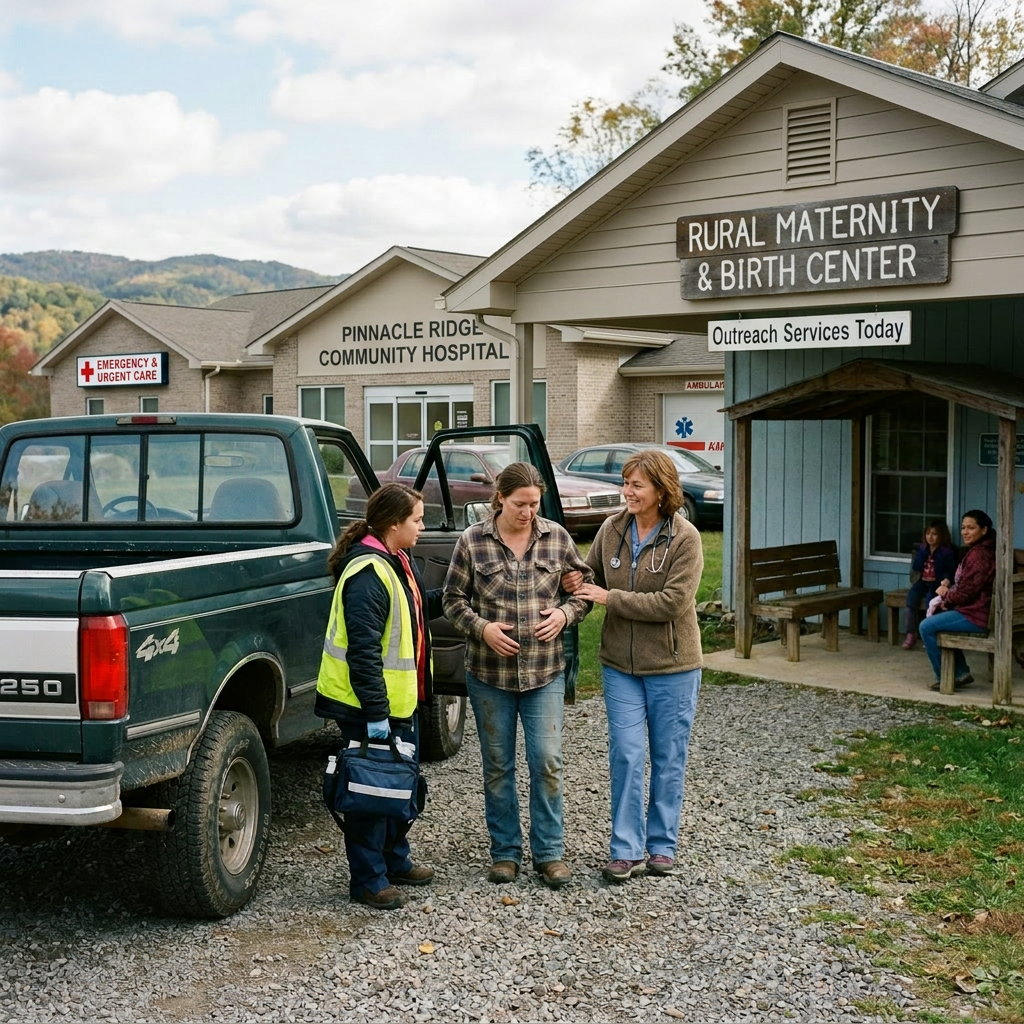
Rural obstetrical care in Canada has limited local access, meaning many women must travel, sometimes over several hours, to give birth.
Care is often provided by fewer specialists and more family physicians, and services vary widely between communities. These gaps can affect outcomes and reflect that rurality is a key social determinant of health.
There are fewer obstetrical specialists in rural areas, so care depends heavily on family physicians and limited staff, which affects consistency of care.
Limited access to rural obstetrical care can lead to worse birth outcomes, increased stress, and financial strain due to travel. It also impacts overall health because rurality acts as a social determinant of health, affecting both mothers and newborns.
Long travel times can lead to delayed care, emergency deliveries, and higher stress, which can affect outcomes.
Recognition matters because rural OB care is an underrepresented but widespread issue in Canada. Acknowledging it helps drive policy changes, resource allocation, and improved access to care, which can lead to better maternal and newborn outcomes.
ArcGIS StoryMap
We have created an ArcGIS StoryMap to illustrate this issue and provide a detailed overview of this CARI+ calculation.
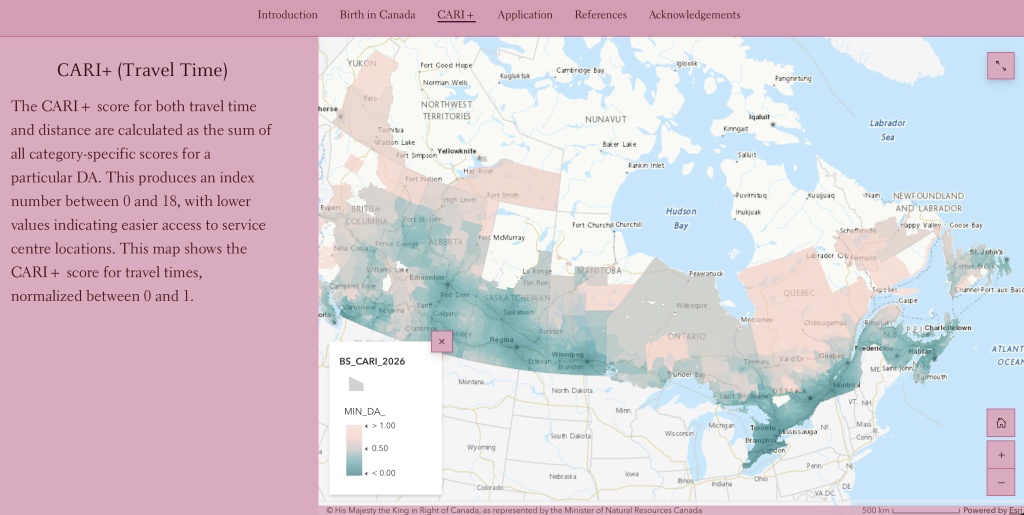
The results reinforce that rural obstetrical care is a system-wide problem influencing equity and accessibility to care by allowing people to observe how underserved rural populations affect regional and urban centers. By mapping rural and urban differences, this StoryMap highlights where service gaps, long travel distances, and provider shortages exist. This can help inform healthcare planning and policy decisions, such as where to invest in rural maternity services, improve transportation systems, or expand provider availability.